01
Closing the natural cycle
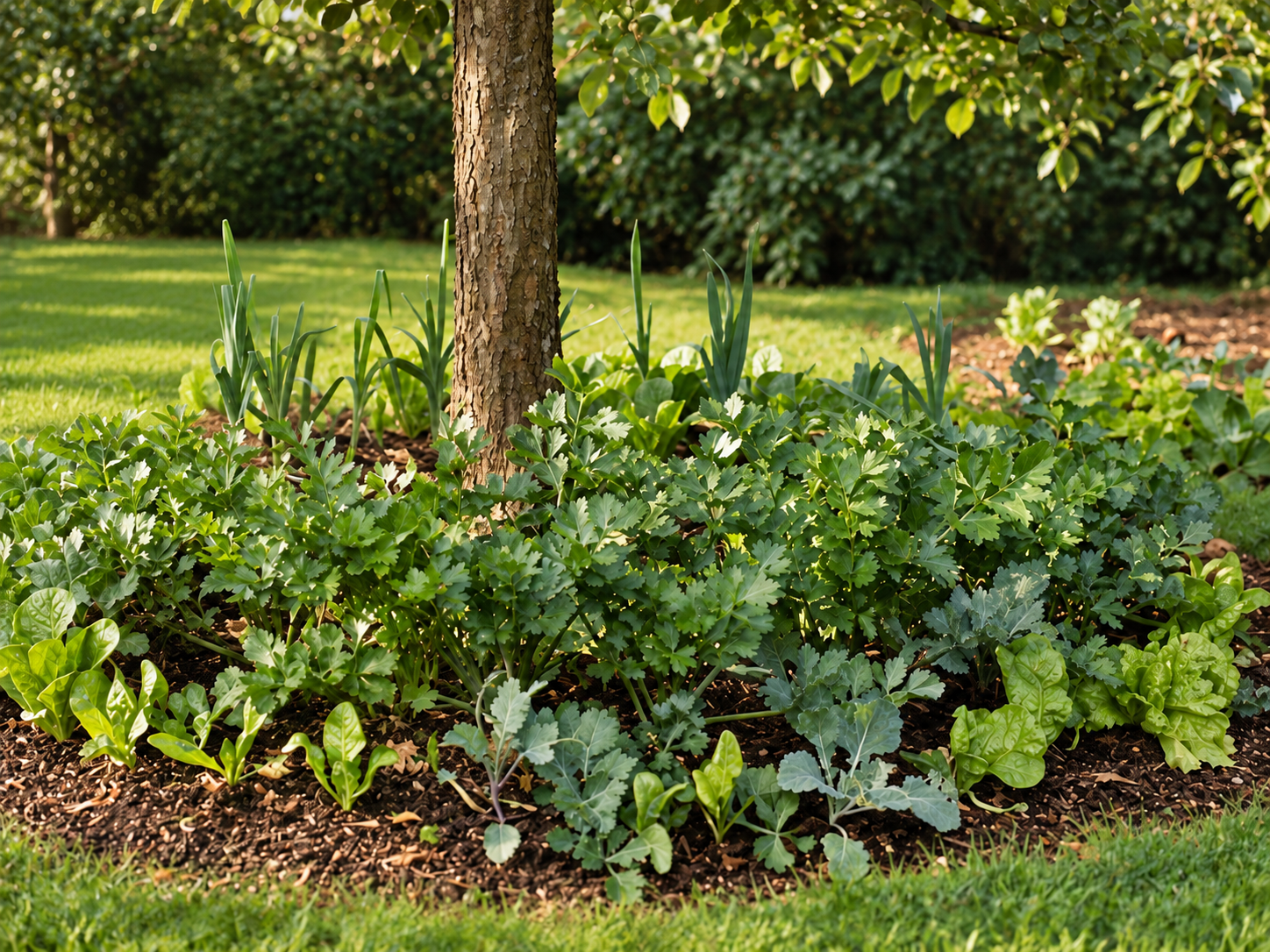
Microorganisms and soil life turn organic residues into compost. Nutrients return to plants and organic matter supports living, crumbly soil. A varied mix, air and balanced moisture are the essentials.
02
Choose a good spot
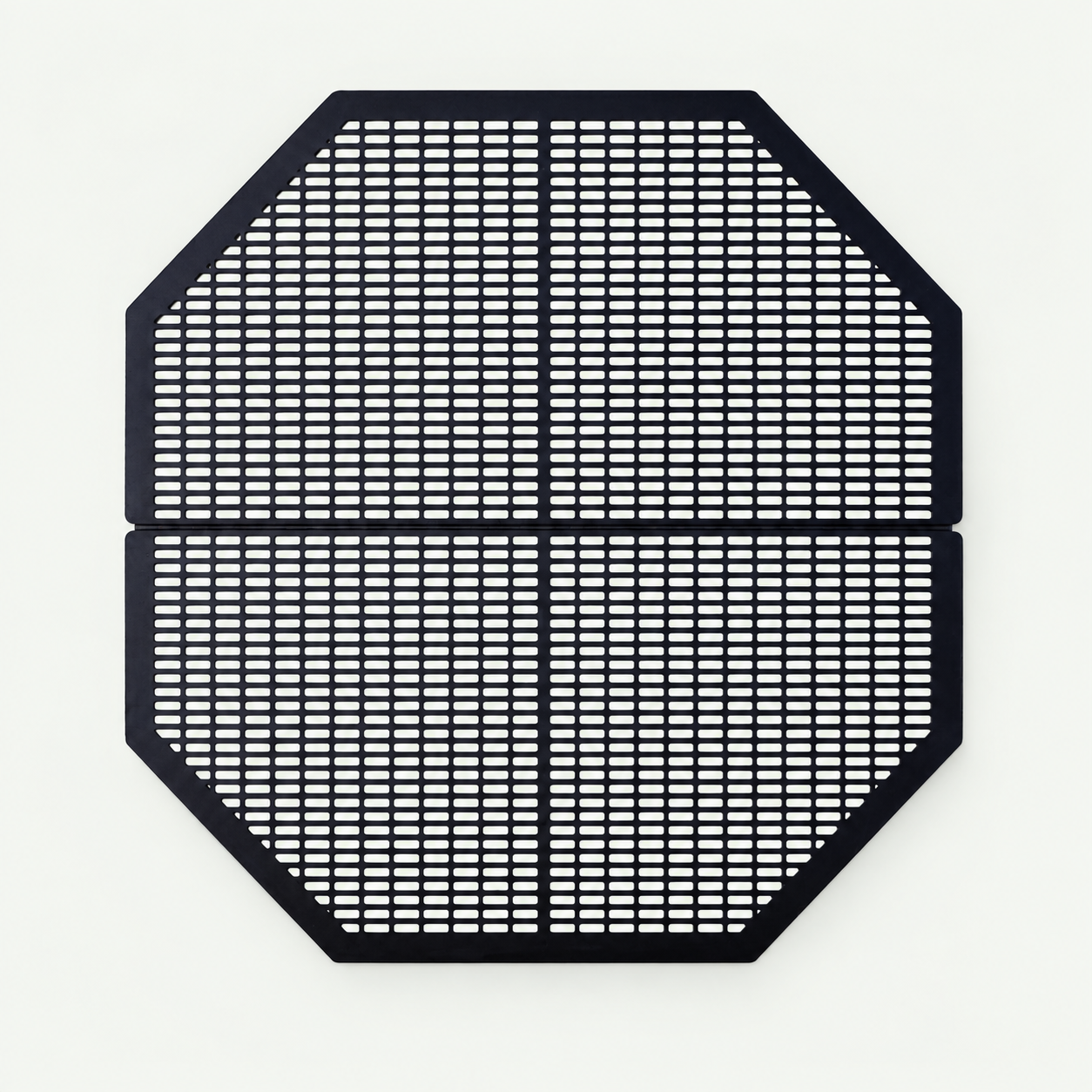
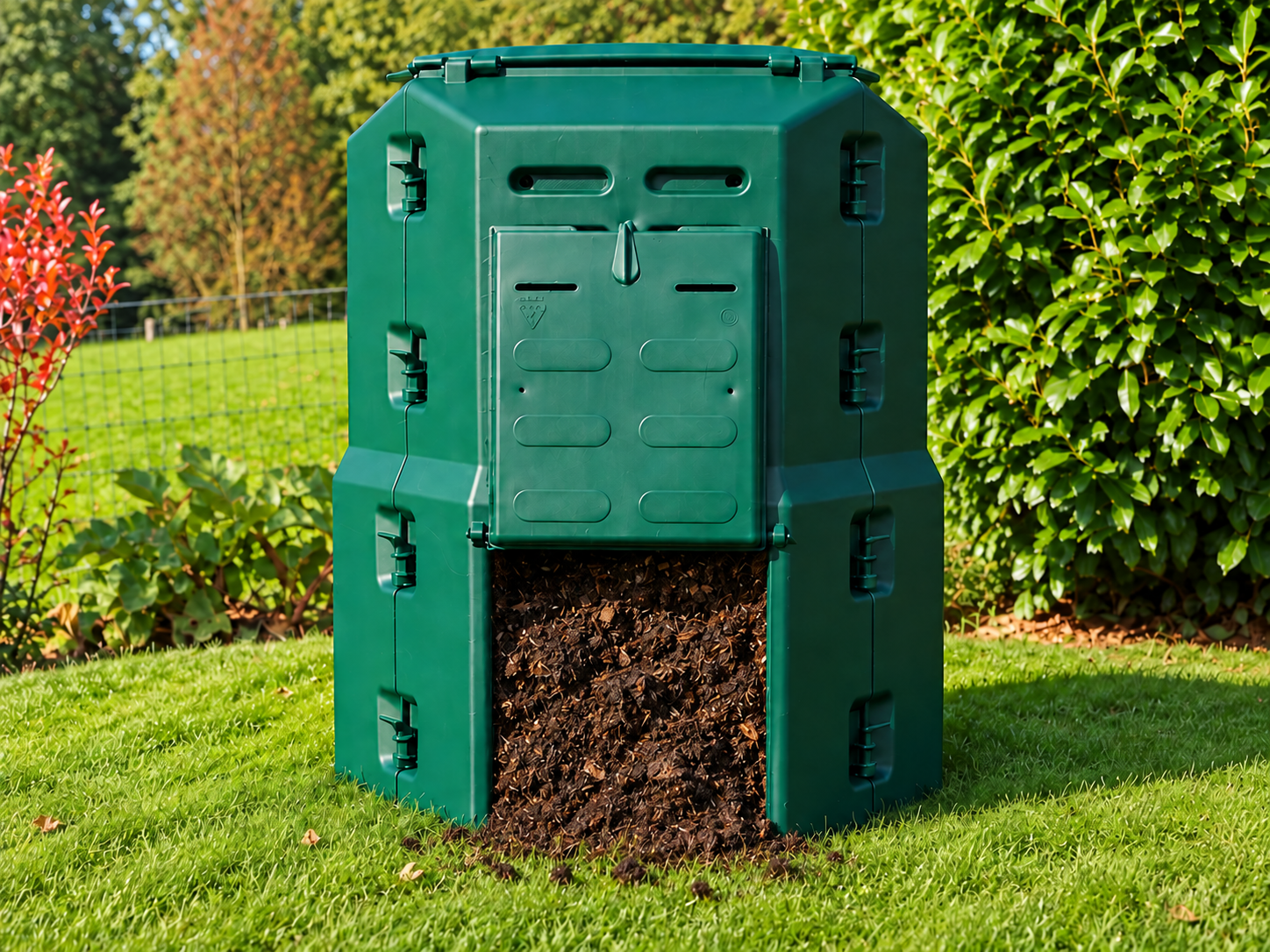
Set the composter level in a sheltered, accessible, preferably partly shaded location. Contact with natural soil lets soil organisms move in. Leave room for filling and harvesting. A mouse grid provides protection from rodents underneath.
03
What goes in?
Suitable materials include fruit and vegetable scraps, coffee grounds, loose tea leaves, chopped plants, leaves and shredded woody prunings. Mix slightly wilted grass clippings in small amounts. Leave out meat, fish, bones, plastic, metal, glass, diseased plants and weeds carrying many seeds.

04
Chop, mix and fill loosely
Chop materials into small pieces, mix thoroughly and fill loosely. Woody material creates air spaces; soft, moist plant waste feeds the microorganisms.
The right carbon-to-nitrogen ratio (C/N)
Carbon provides energy and nitrogen supports growth. As a practical rule, measure loose volumes:
This volume mix is not the chemical C/N ratio: around 25–30:1 is favourable. Composition depends on the materials; sawdust is especially rich in carbon. Keep the structure loose and moisture even.
Avoid thick layers of wet grass: they mat together and exclude air.
05
How HANDY helps
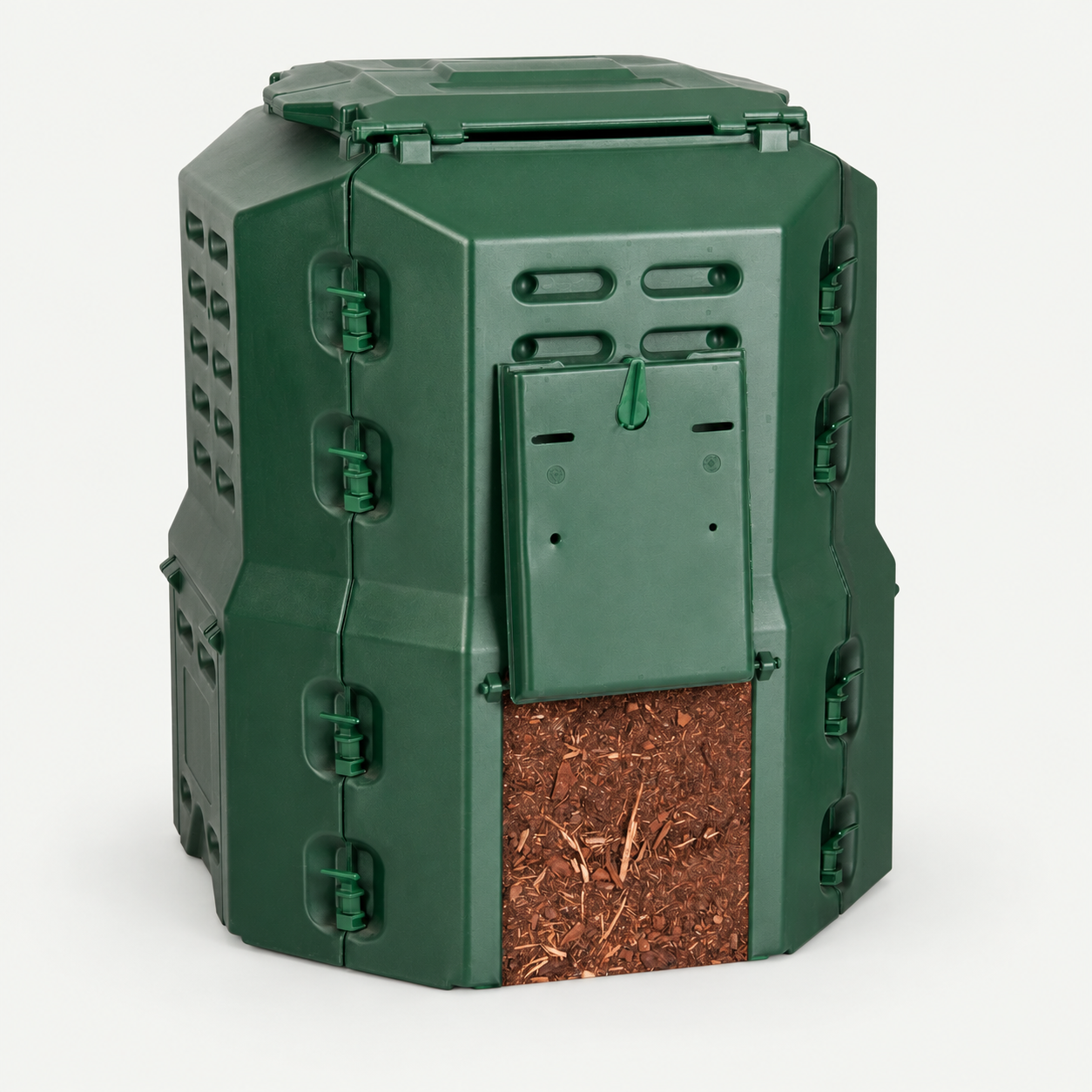
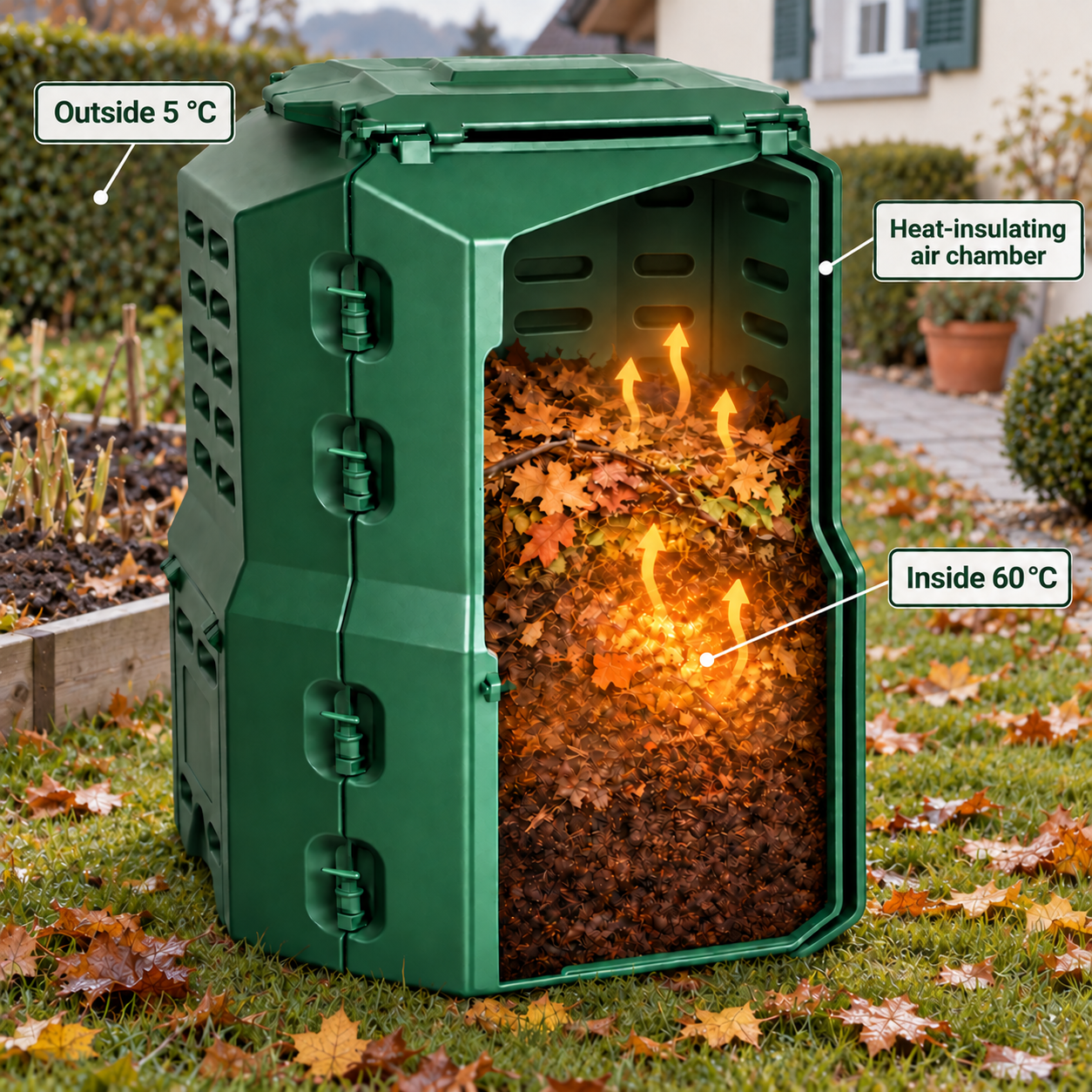
Air chambers in the double walls and lid retain some of the heat from decomposition and limit drying around the edges. A hot phase can reduce many seeds and unwanted microbes, depending on temperature and duration. Keep diseased plants out nevertheless. Decomposition slows in winter: insulation still needs good compost care.

06
Hot composting: heat from within
Microorganisms release heat as they break down fresh material. A sufficient quantity, mixed well and added together, can exceed 50 °C in the centre. Combine moist and dry ingredients, keep the structure loose and maintain even moisture. HANDY retains some of this heat; it does not generate heat itself. The compost then cools and continues to mature. Small regular additions can decompose without a pronounced hot phase. Continue to exclude diseased plants and weeds loaded with seeds.
Composting in autumn and winter
Keep collecting suitable waste. Cold weather slows the microorganisms; decomposition may pause if the material freezes through. Mix moist scraps with dry woody material without compacting. Maturity, rather than the calendar, determines whether the compost is ready to use in spring.

07
Balance water and air
Aim for the moisture of a wrung-out sponge, not a soggy mass. Loosen compacted material. Add water gradually when dry, or mix in dry woody material when too wet.
08
Troubleshooting
- Rotten smell: aerate and add dry woody material.
- Dry or greyish material: moisten gradually and mix.
- Little heat: check moisture and the mix; allow more time in cold weather.
- Matted grass: break up the layers and add structural material.
09
Fresh or mature compost?
Under good conditions fresh compost may be ready in 6–8 weeks for use as mulch. Do not use it as pure potting or seed compost. Mature compost takes several months, roughly six according to the guide. Test with cress sown in 2–3 cm of moist compost: even green growth suggests good tolerance; yellow or weak seedlings suggest waiting longer.


10
Harvest and use
Harvest through the lower access flap. To remove a whole side panel, release its clips; empty the composter before refitting it. Fresh compost is suitable as mulch under fruit trees, shrubs and established crops. Mix mature compost with soil; finely screened material can also be used on lawns.
Two garden ideas: grow suitable vegetables beneath fruit trees; reuse an old wire compost bin as a climbing support for tomatoes or flowers, filling it about a quarter with compost.